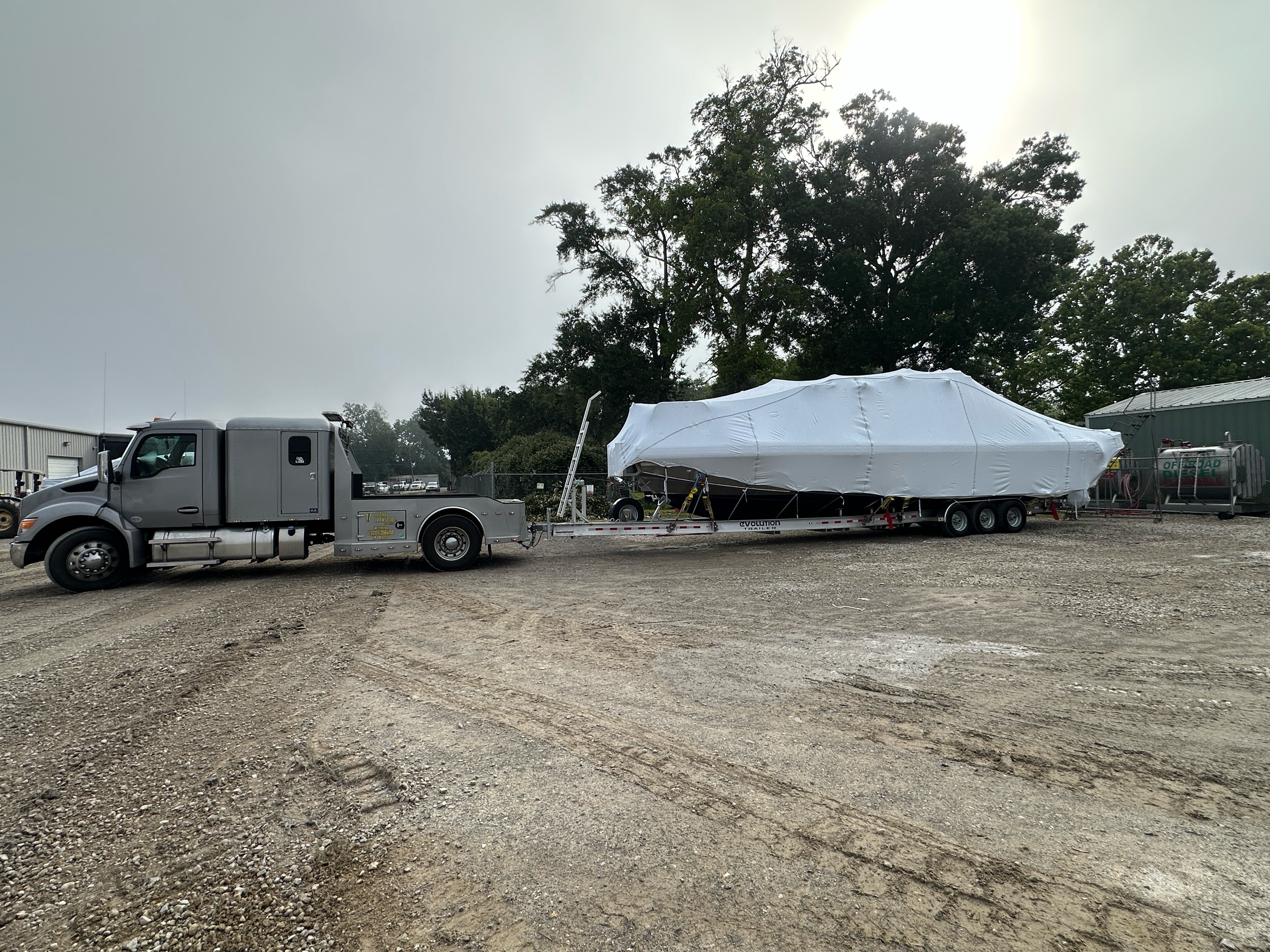


Project Cargo Spotlight: Storage Tank Transport from Orlando, FL to Syracuse, NY
Atlantic Logistics successfully coordinated the transportation of a 31,000-pound storage tank from Orlando, Florida, to Syracuse, New York. Measuring 27 feet long, 10 feet 6 inches wide, and 11 feet 4 inches high, the oversized load traveled approximately 1,250 miles aboard a removable gooseneck (RGN) trailer.
With specialized equipment, careful route planning, and close coordination throughout the move, the shipment was delivered safely and efficiently. Projects like this demonstrate Atlantic Logistics' ability to manage complex oversized freight while ensuring reliable service from origin to destination.

About Atlantic Logistics:
Atlantic Logistics is a woman-owned Jacksonville, FL-based3PL, freight brokerage, and transportation provider offering domestic and international logistics solutions. We specialize in truckload (FTL), LTL, flatbed, expedited, intermodal, drayage, and project cargo transportation. Our services include cross-border freight between the U.S., Canada, and Mexico, along with customs brokerage coordination. With over 20 years of experience, we operate across all major U.S. shipping lanes and ports, providing reliable capacity, supply chain solutions, and end-to-end freight management for shippers nationwide and globally.

More Government Loads

LVSR Truck Moved for the Military
Our Government Freight division moved a Cargo Truck from Jacksonville, FL – Charleston, SC.
Learn More
Hauling Sikorsky SH-60 Seahawk for the US Navy
Our Government Freight division had the privilege of hauling a Sikorsky SH-60 Seahawk for the U.S. Navy.
Learn MoreMore Featured Loads

Atlantic Logistics Supports the United States Army
Maintaining Focus and Providing Support is more important than ever as the Pandemic continues.
Learn More
Atlantic Logistics Supports The Troops
Even during a pandemic, maintaining mission readiness is critical.
Learn More

Search Atlantic Logistics


Our Services